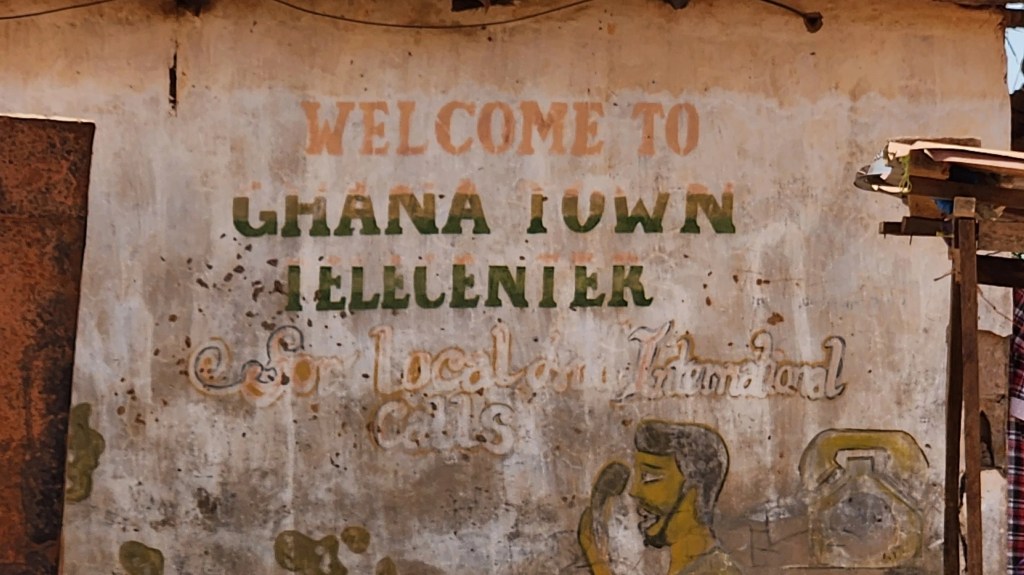
Wherever I’ve been on my journey along the coast of West Africa, I’ve encountered communities of Ghanaians who for generations have lived in the country they now call home. These are women whose parents came with them as children from immediate post-independence Ghana and who are now in their 60s and 70s with memories of their motherland still firmly in their minds even as their physical contact with the country has diminished.
Circumstances took their parents abroad. As families whose livelihoods are steeped in the ocean, they followed the current to where they were most likely to succeed. For Madame Pokuaa’s family, that was a thousand miles away in the tiny sliver of land that is The Gambia. She was a toddler when she moved from Ghana’s Central Region, which sits on the Gulf of Guinea, to the place that became known as Ghana Town along The Gambia’s Atlantic Coast, which is where I met her.
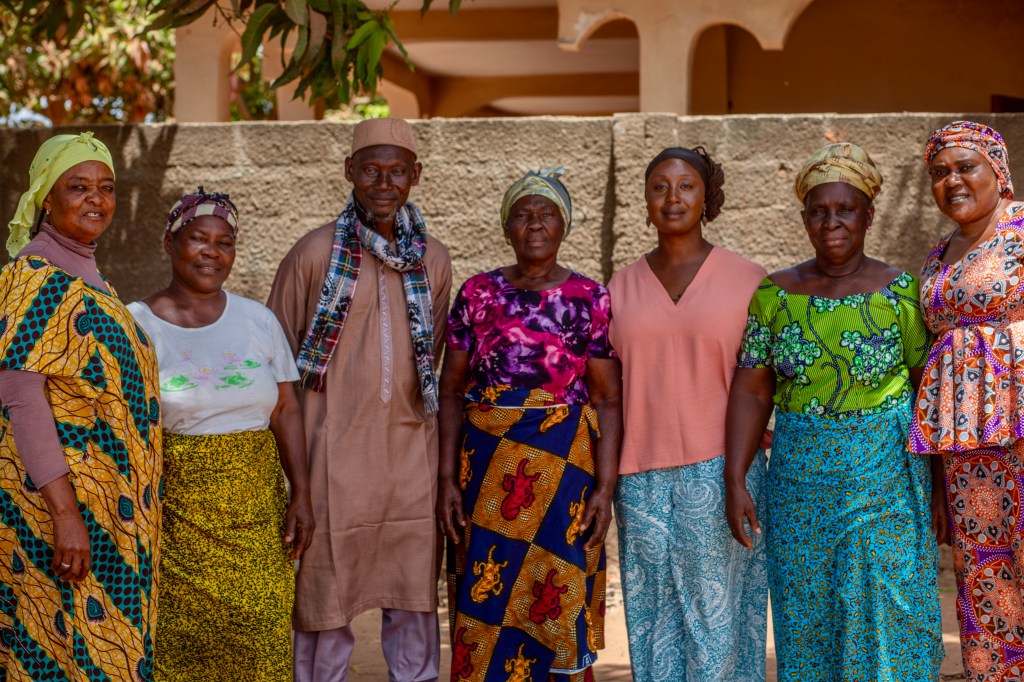
Madame Pokuaa and her contemporaries, Madame Adjoa and Madame Mensah, all first-generation Gambians, have known each other for most of their lives, bonded by sameness and difference, and by their relationship to a place that, for them, has receded from the material into the mist of memory. Though they had married Gambian men and given birth to Gambian children, and the parents who had brought them there were now buried in Gambian soil, their connection to Ghana remained unbroken, however tenuous it appeared on the surface.
This manifested itself most tellingly through language. Multilingualism is common in West Africa, both within countries and within the wider region. It is not unusual for people to speak two or three local languages in addition to their own and the country’s official tongue, a colonial hangover which, in the case of West Africa, means English, French, Arabic and, exceptionally, Portuguese.
When I asked the women what language they would prefer to speak in, they initially chose Mandinka, the most widely spoken language in The Gambia. But as the conversation moved beyond the rudimentary and into the realm of remembrance, their chosen language proved elusive. When the women wanted to express themselves deeply, they instinctively switched to their Ghanaian mother tongue, Fante, which was, quite literally, their love language; it affirmed them. Before long, my translator, Mrs Senghore became redundant as Madame Pokuaa and I found common ground in my non-existent Fante made possible by my marginally functionable Twi. We spent hours going back and forth in a language we both had claim to but, for reasons of history, had never quite mastered.
According to the International Organisation for Migration, West Africa has the highest number of intraregional migrants in Africa. The region has “long been characterised by high levels of mobility that far predate the current configuration of borders established during the colonial era.” For diasporans of all backgrounds, the mother country is both memory and illusion while language, like borders, divides us, unites us and, ultimately, transcends us.
Header image by E. Konu
 Sylvia Arthur
Leave a comment