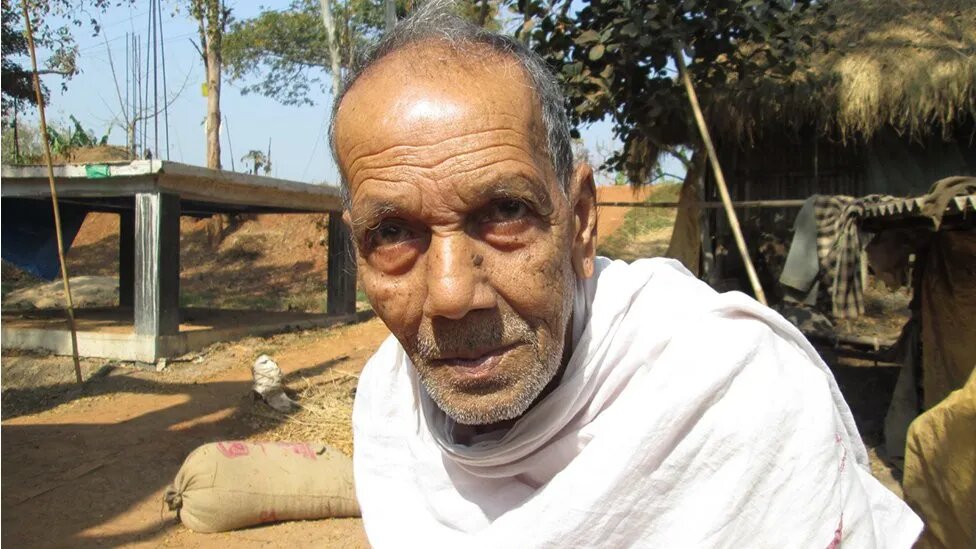
I’m deeply moved by this story about survivors of the Bengal famine and the profound work that Sailen Sarkar has been doing over the last few years travelling around the Bengali countryside gathering their first-hand accounts.
“Sailen has now gathered more than 60 eyewitness accounts. In most cases, the people he says he talked to were uneducated, and had rarely spoken about the famine or been asked, even by their own family. There is no archive dedicated to collecting survivor testimonies. Sailen believes their stories were overlooked because they were the poorest and most vulnerable in society.”
This quote, in particular, resonates with me: “It is as if they were all waiting. If only someone would listen to their words,” he says. I’ve found this to be so true on my own journey and in my own work. Silence does not always equate to complicity, particularly among those who have suffered oppression or have never had the chance to raise their voices to a whisper let alone a shout.
“We didn’t have to search for them – they weren’t hiding, they were all in plain sight, in villages all across West Bengal and Bangladesh, who were just sitting there as the largest archive in the world,” says Kushanava Choudhury, a Bengali-American writer, who accompanied Sailen on one of his visits to meet some of the survivors. “Nobody had bothered to talk to them. I felt tremendous shame about that.”
There are as many stories in the world as there are people. Every one of them deserves to be told and heard. Wishing Sailen Sarker more strength in his body and mind, and more power in his work.
Image: Sailen Sarkar/BBC | Caption: The famine forced Sripaticharan Samanta to leave his home village and take his chances in the city
 Sylvia Arthur
Leave a comment