-
New Event: To Improvise An Archive
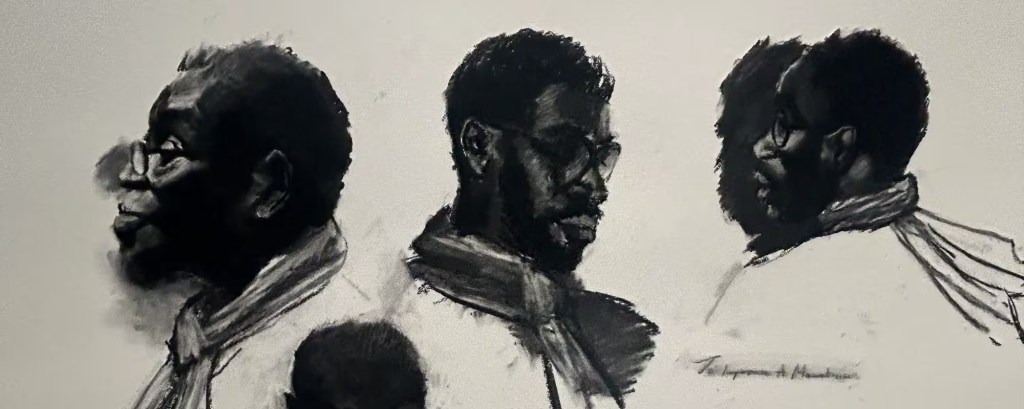
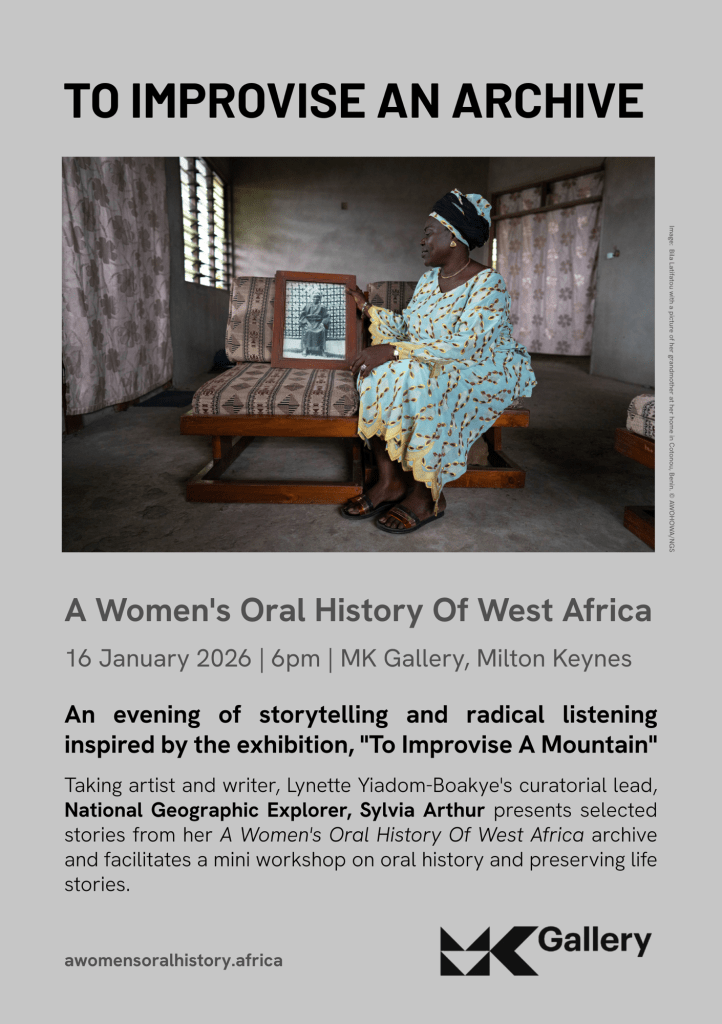
Last weekend, I gave a talk at MK Gallery titled “To Improvise An Archive”, inspired by and in response to their current exhibition, “To Improvise A Mountain”, curated by the acclaimed British-Ghanaian figurative painter Lynette Yiadom-Boakye. It brought the women from the “A Women’s Oral History Of West Africa” archive into conversation with artists and artworks featured in the exhibition, including Barbara Chase-Riboud, Glenn Ligon, Lisa Brice, Zoe Leonard and, of course, Lynette Yiadom-Boakye.
Thank you to everyone who came out and made it such a beautiful evening of community and conversation. The turnout was far more than I expected, and it was lovely to see so many family groups (a wonderfully curious five-year-old!), older people, and everyone in between, including some who’d travelled from afar. Everyone was engaged, and after the talk, many stayed for a workshop, which sparked intimate conversations among people from different backgrounds and generations who didn’t know each other.
Video by Nia Gallimore As I was leaving, an 85-year-old white British woman told me that she identified with the stories of her West African peers, and the event made her realise that women the world over face the same struggles. Her comment, among others throughout the night, reinforced, in a new way, the unifying value of this project, especially in times like these, and the necessity of perseverance.
I look forward to more events and encounters throughout the year.
Post-talk oral history workshop -
New interview on TWB Book Show
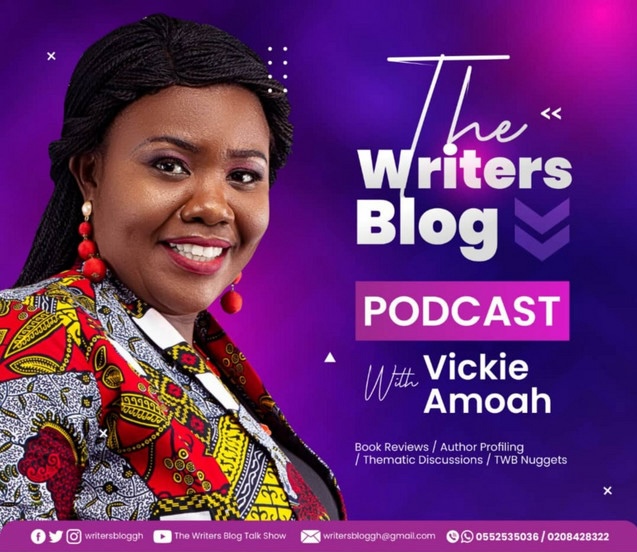
TWB Book Show returns with a compelling conversation featuring Sylvia Arthur, Founder of the Library of Africa and the African Diaspora (LOATAD), as we explore the theme: “Preserving African Stories, Shaping Global Narratives.”
This episode is a rich reflection on books, culture, storytelling, and the responsibility of Africans to own and preserve their narratives.
As Ama Ata Aidoo once said, “If you don’t tell your story, someone else will tell it for you—and they may not tell it right.”
Hosted by Vickie Amoah, this discussion celebrates African heritage, literary preservation, and the power of authentic voices shaping the global story.
-
“It’s a timebomb”: Ghana’s healthcare crisis


Subscribe to continue reading
Subscribe to get access to the rest of this post and other subscriber-only content.
-
LOATAD is 8!

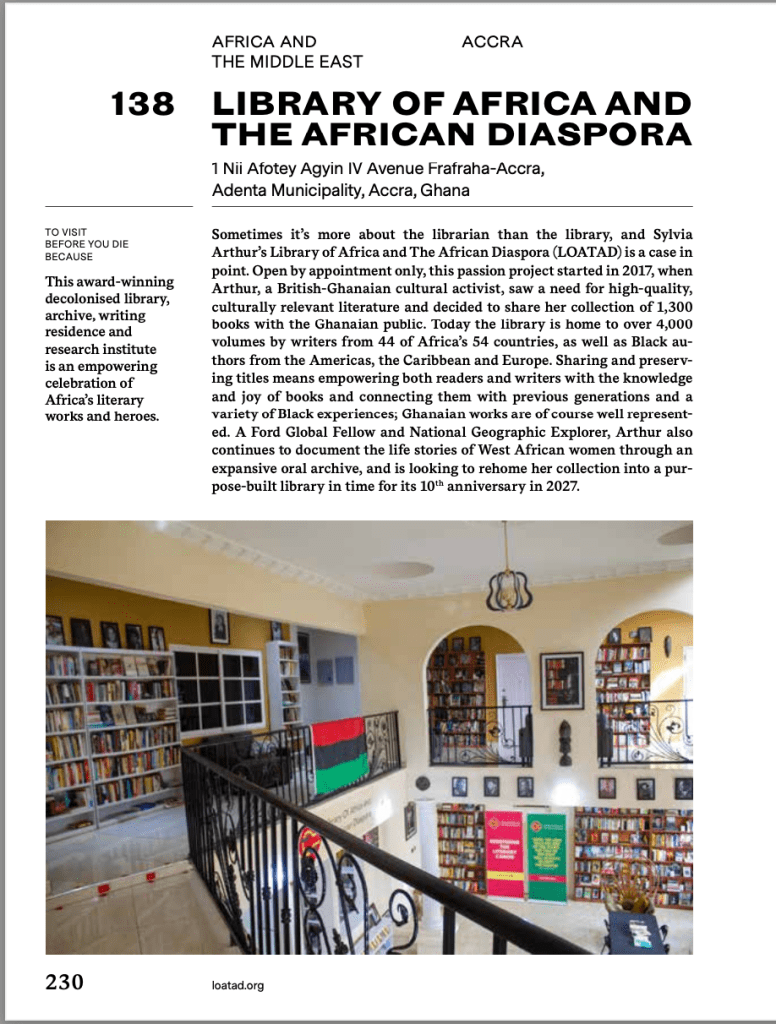
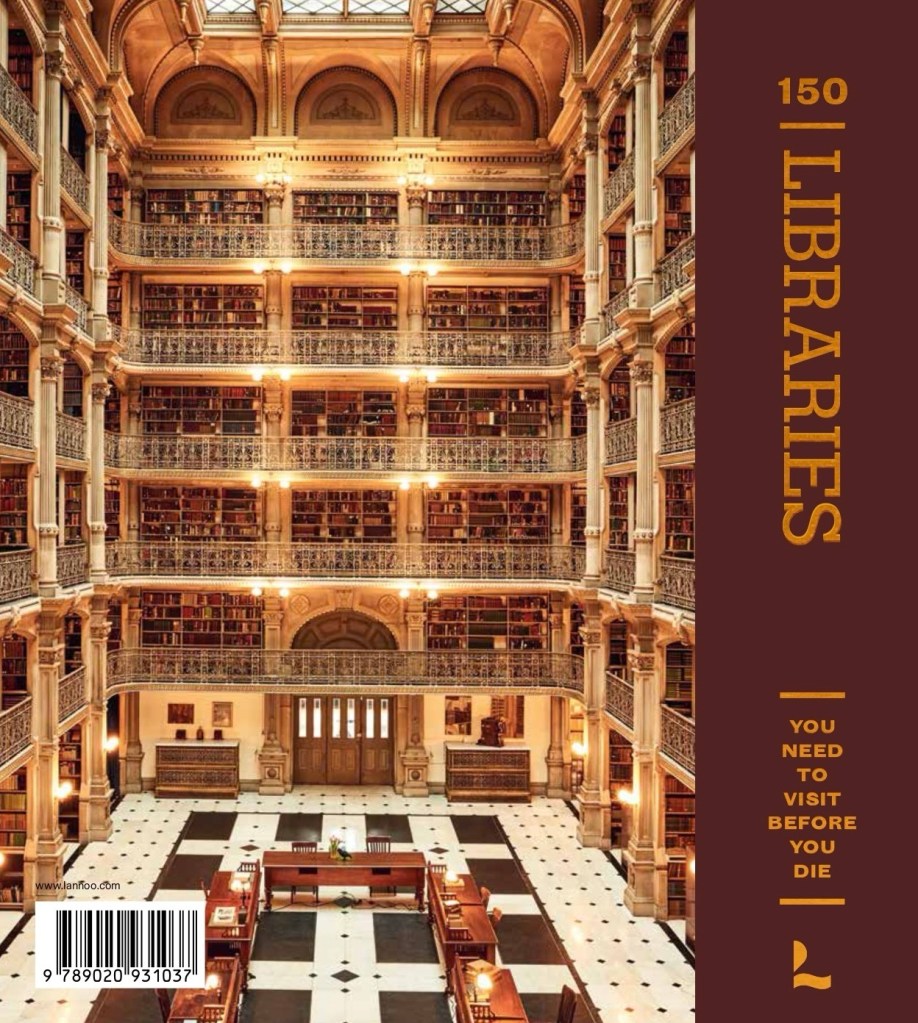
The Library Of Africa and The African Diaspora (LOATAD) is eight years old today!
During that time, we’ve hosted over 100 writers-in-residence, run hundreds of events, created or co-created three school and community libraries, delivered hundreds of lessons to thousands of schoolchildren, and donated thousands of culturally relevant books to individuals and communities. And that’s just off the top of my head! The personal and professional sacrifices have been great, but the outcomes speak for themselves.
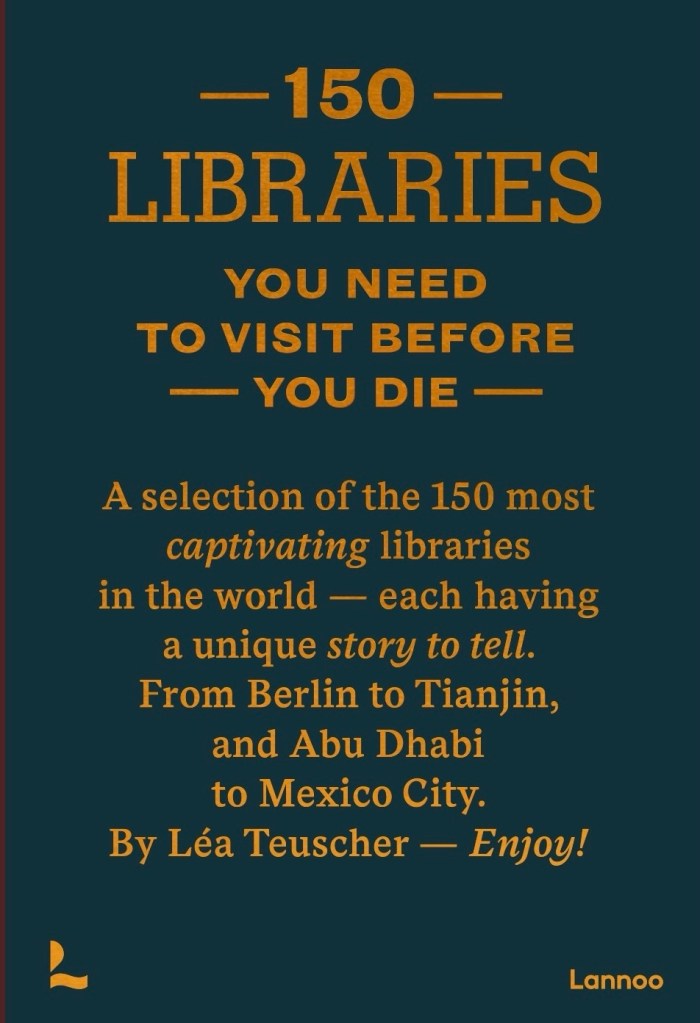
So it’s nice to be recognised in a stunning new book by Lannoo Publishers as one of “150 Libraries You Need to Visit Before You Die.”
The book features “the ultimate list of the world’s most beautiful libraries,” of which LOATAD is one, repping Africa along with 10 other libraries on the continent:
“Whether you are an avid reader or architecture lover, this richly illustrated book serves as an inspiring travel guide and is the perfect reference for those in search of quiet yet endlessly interesting spaces. From opulent Baroque monasteries to sleek contemporary cultural hubs, each library has its own story.”
In 2020, I was interviewed by an Italian journalist who suggested that a library as exquisite as LOATAD was an extravagance in a country like Ghana, as if beauty doesn’t belong in Africa or is somehow out of place, the implication being that beauty is the privilege of the privileged, and that (those perceived as) poor don’t need or deserve it; they have more pressing concerns.
What she failed to understand is that beauty inspires beauty, and there is nowhere else this library could be but Ghana, the home of big political and cultural dreams, and Africa, the cradle of a history so rich it predates Western concepts of time.
Speaking of time: Now is the time to build African institutions!
Thank you to everyone who has supported us over the last eight years – patrons, funders, individual donors, and followers. We survive against all odds, and we do so beautifully.
While we do, be sure to visit us. As the book says, we are one in 150!
Onward…
-
New event: Legacy Talk at Young Africa Centre (YAC)

Telling Our Stories: Memory, Archives and Legacy from ‘A Women’s Oral History of West Africa‘ by Sylvia Arthur.
Friday, 21 November 2025 at 6.30 pm. Online.
About November’s Legacy Talk
In this Legacy Talk, we sit down with Sylvia Arthur to explore the methodology behind A Women’s Oral History of West Africa, uncover the transformative power of archiving, and provide audiences with practical insights on how they can preserve and engage with history themselves.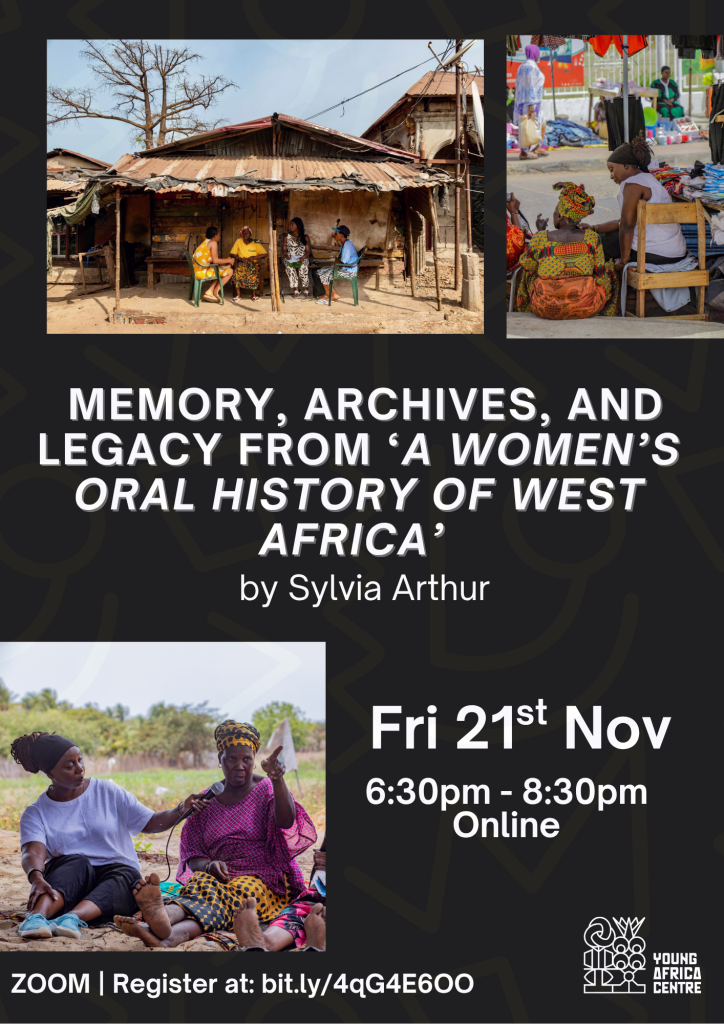
Themes of the Talk:
- The Practice and Methodology
- Reclaiming the Narratives: The Process of Archiving Our Stories
- The Power of the Archive: What We Learn by Listening and Preserving
- Tools for Preservation: Archiving Skills for Family and Community
-
Now is the time to build African institutions

I wrote an op-ed for Ghanaian media to mark the 65th anniversary of the Ford Foundation’s West Africa Office, emphasising the importance of philanthropic support in building and sustaining Africa-based, Africa-centred institutions:
“In 1960, the landmark year in which 17 African nations achieved their independence, the Ford Foundation announced its presence in West Africa with the opening of its regional office in Nigeria. For 65 years, the Foundation’s impact in the region has remained consistent, demonstrating that continuous investment in individuals with a vision to build more equitable societies can be transformative.
As a Ford grantee, I can attest to the significance of the Foundation’s support of my efforts to challenge inequality in Ghana and beyond.”
-
New event in Lagos, Nigeria
I’m looking forward to presenting A Women’s Oral History Of West Africa at the G.A.S. Foundation‘s re:assemblages Symposium in Lagos, Nigeria, next month. This will be the first time I’ll be speaking about the project on the African continent and in West Africa, no less:
Keynote Panel: Rematriating the Archive
This keynote panel examines how the practice of rematriation, conceptualised by Indigenous women of Turtle Island in contrast to the patriarchal framing of repatriation, offers a framework for returning cultural property and knowledge to their rightful custodians, or, in rematriation terms, returning the sacred to the mother. The panel explores how repatriating archives creates practices that resists colonial and patriarchal logics, foregrounding care, orality, embodiment, kinship, and collective memory. In these spaces, rematriation is not a verb and a practice of listening, responding, and nurturing women’s presences in archives.
Sylvia Arthur presents A Women’s Oral History of West Africa, a living counter-archive centred on women elders, where stories circulate through orality, performance, and embodied practice, creating cycles of memory that resist erasure and foreground women’s voices.
Hon. Aisha Adamu Augie reflects on the FESTAC ’77 archive at CBAAC, tracing women’s presences across photographs, recordings, and documents often overlooked in institutional memory. She considers the work of seeing and being seen in the archive, addressing historical gaps, and preserving women’s contributions as living, resonant presences shaping Black and African cultural memory.
Dr. Jareh Das traces the living legacy of Ladi Kwali, Nigeria’s master potter, whose gestures, kinship, and material practice transform vessels into archives in motion. Kwali’s craft, transmitted across generations, embodies a continuous dialogue between past, present, and future, illustrating how women’s embodied knowledge keeps archives alive.
-
New online event with Black Women Radicals
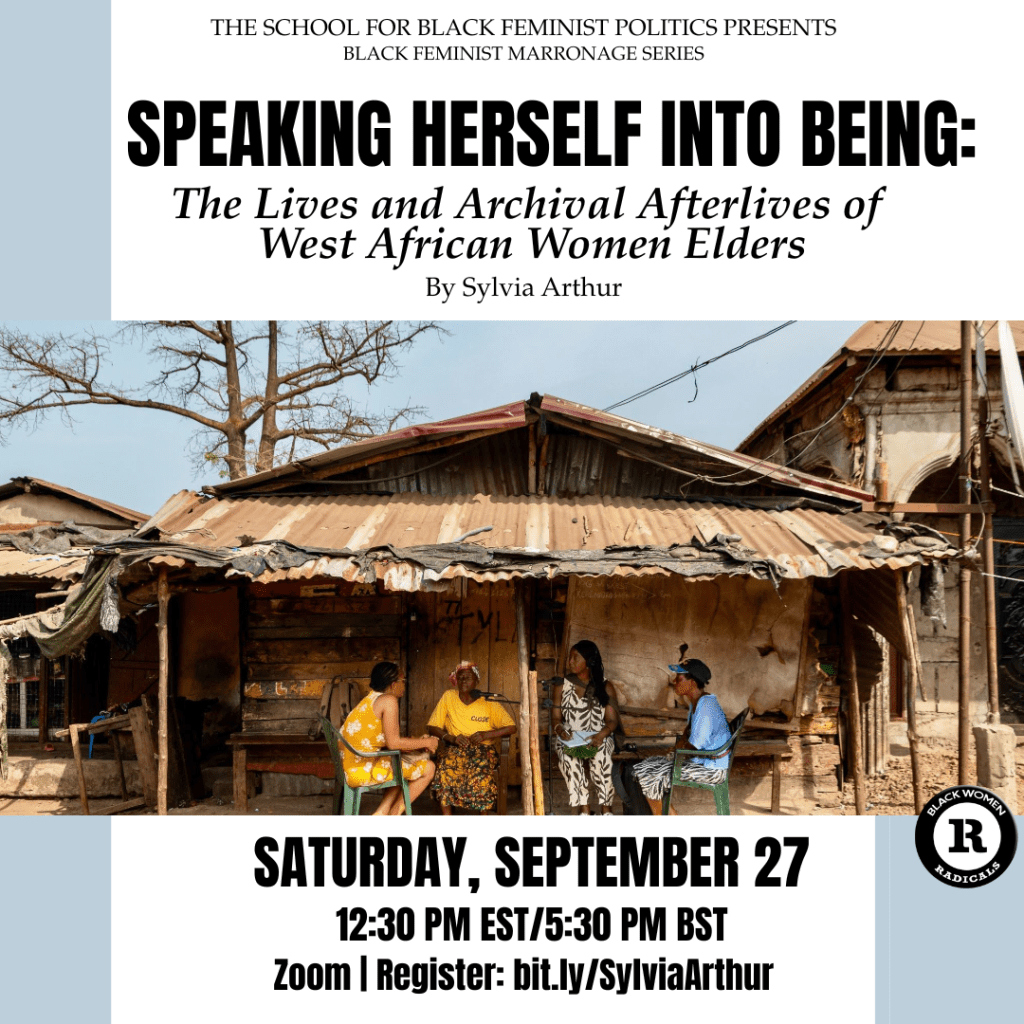
Following on from my first in-person event in Berlin last month, I’m looking forward to doing my first online event for “A Women’s Oral History Of West Africa” later this month with the brilliant Black Women Radicals and The School for Black Feminist Politics.
Join us online on Saturday, 27 September for “Speaking Herself Into Being: The Lives and Archival Afterlives of West African Women Elders,” a teach-in exploring the lives of West African women elders and the possibilities the archive offers for expanding their her/stories and preserving their legacies.
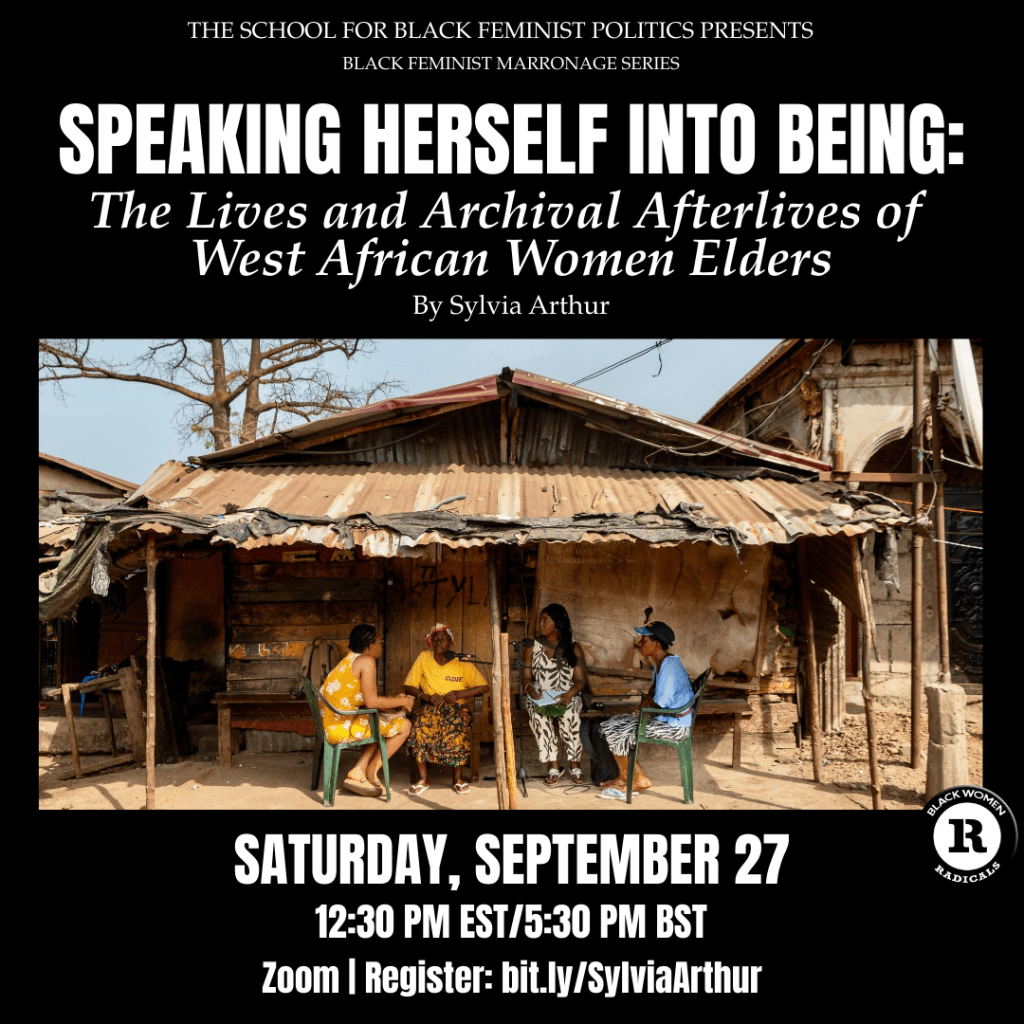
 About the teach-in: At 59, women in West Africa have the lowest female life expectancy in the world. Sylvia Arthur has interviewed 100 West African women over 60 to create an extensive oral archive to record their stories, preserve their legacies, and serve as a corrective to their erasure from official histories. Speaking openly, aware that their words and thoughts will be permanently documented, the women are rejecting the imposition of silence and “immanent and imminent” death that overshadows their lives. As women who have lived beyond expectation, they are unicorns, survivors, fugitives. In this teach-in, Arthur will share audio excerpts from the archive that offer a fresh perspective on the lives of elder African women and provide insight into how they live, love, survive, and thrive, defying stereotypes and capturing the joys and challenges of West African womanhood. She will discuss her practice and methodology, and explore the potential for expansion that the archive offers beyond just preservation for the afterlives of West African women elders.
Find out more here
-
Aja Binta Jammeh Sidibe (1955-2025)

As a journalist, I’m used to working to a deadline and writing against time, but over the last three years, I’ve been in a futile battle with trying to outpace death, which, as a human being, I’ll never get used to.
A few days ago, I received a message from my fixer in The Gambia that one of the women I interviewed for my project, “A Women’s Oral History Of West Africa,” has passed away.
Aja Binta Jammeh Sidibe (1955-2025) was a proud daughter of The Gambia who dedicated her life to fighting for women’s rights. A staunch anti-FGM campaigner, she was at the forefront of early efforts to outlaw the practice, which, though now banned in the country, is still inflicted upon 73% of women and girls aged 15 to 49, one of the highest rates in the world.
A well-known figure in The Gambia, she was a woman of many firsts. Though her parents were not formally educated, her academic potential was spotted early. She was one of only eight girls in her primary school class of 35, one of only four to sit O and A-levels at the prestigious Gambia High School, and one of the first women in The Gambia to earn a degree. Her husband, the renowned oral historian, Dr Bakary Sidibe, was The Gambia’s foremost scholar of traditional culture. Having worked with the UN and USAID, among others, she was appointed president of The Gambian Women’s Bureau. Eventually, she set up her own organisation focused on women’s empowerment.
When I interviewed her at home in April 2023, I concluded our conversation with the same question I ask every woman: “If there’s one thing you could change about your life, what would it be?” “That’s a very tough question,” she mused. “Changing my life? I’m really content. I have nothing to crave at the moment. Only to pray to God to give me a long life and good health, and to continue mentoring my women.”
Aja Sidibe died one month short of her 70th birthday. By West African standards, she lived a long life. Yet statistics show that if a man or woman in West Africa is fortunate enough to reach 60, the odds are that they will live, on average, another 17 years. So news of her passing came as a shock. She was strong and making plans, and I was looking forward to sharing the podcast with her and the other women later this year.
At my recent event in Berlin, I was separately approached by two men who asked how I deal with carrying these stories. They were curious about the emotional toll of doing this work. I told them it was hard, but also a privilege, and that remains true.
Lately, my uncle has taken to reminding me that this is a pitfall of doing this job, that being a journalist means you must steel yourself and carry on, and he’s right, of course.
So I’ll just say, “Travel well, Aja Sidibe. It was a pleasure to share time, space, and stories with you.”
Onward.
Aja Sidibe’s story features in episode 3, “When the political is personal,” of the “A Women’s Oral History Of West Africa” podcast.
Image: Aja Binta Jammeh Sidibe at her home in The Gambia, April 2023. Sarjo Baldeh/AWOHOWA/NGS.
-
News story in The Continent


-
Subscribe
Subscribed
Already have a WordPress.com account? Log in now.
 Sylvia Arthur