-
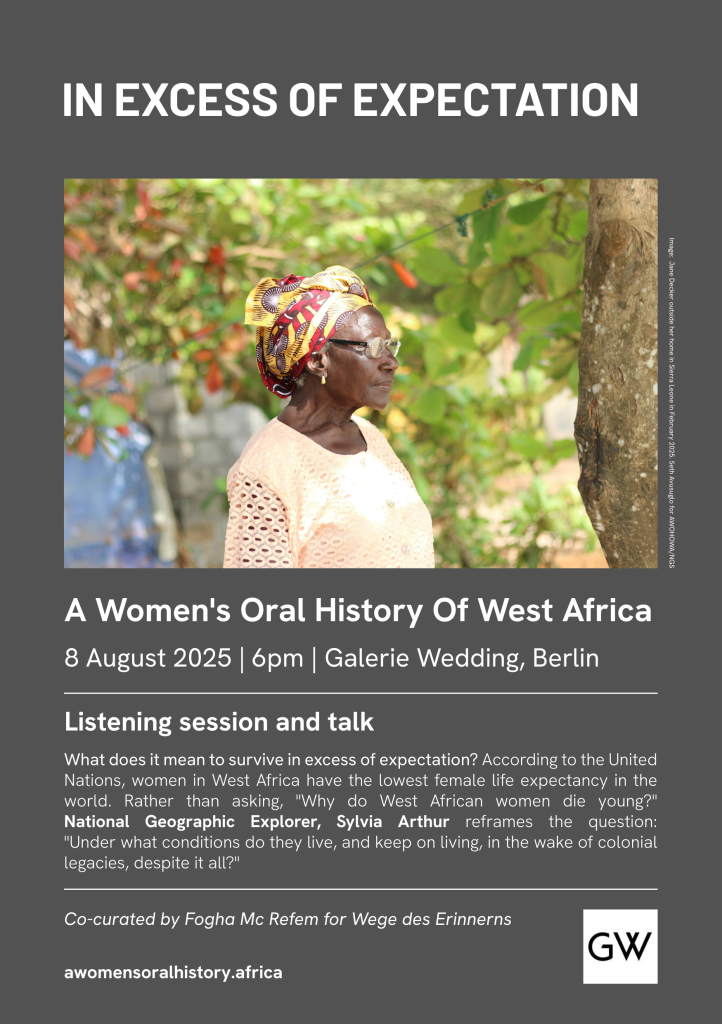
New in-person event for AWOHOWA in Berlin
-
New article on The Guardian

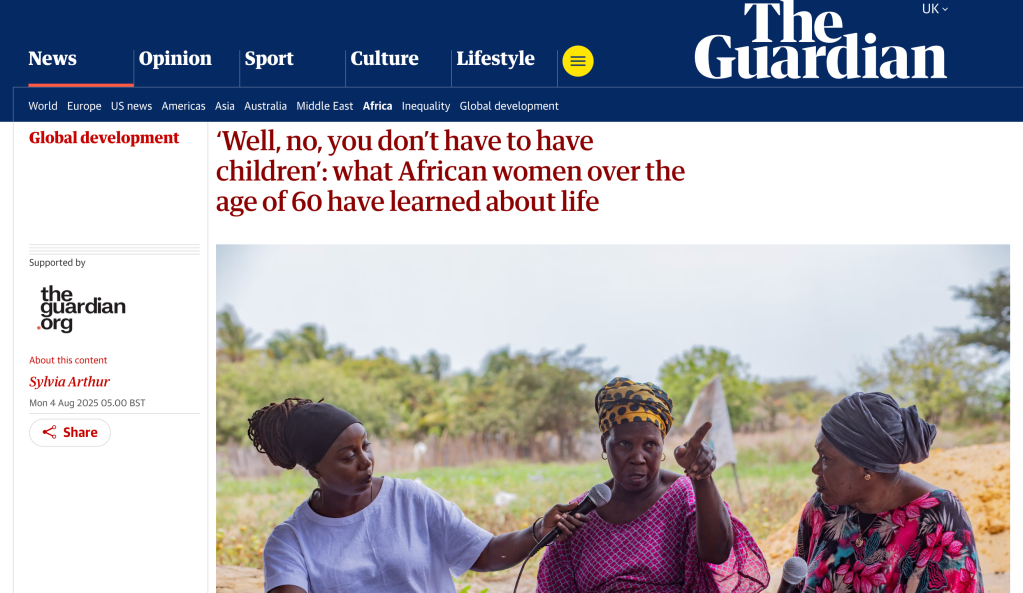
“Women across west Africa have a life expectancy of 59. In a rare project, Sylvia Arthur set out to give voice to those who have lived beyond expectation, whose experiences have been largely overlooked”
Click to read the article in full
-
What solidarity looks like
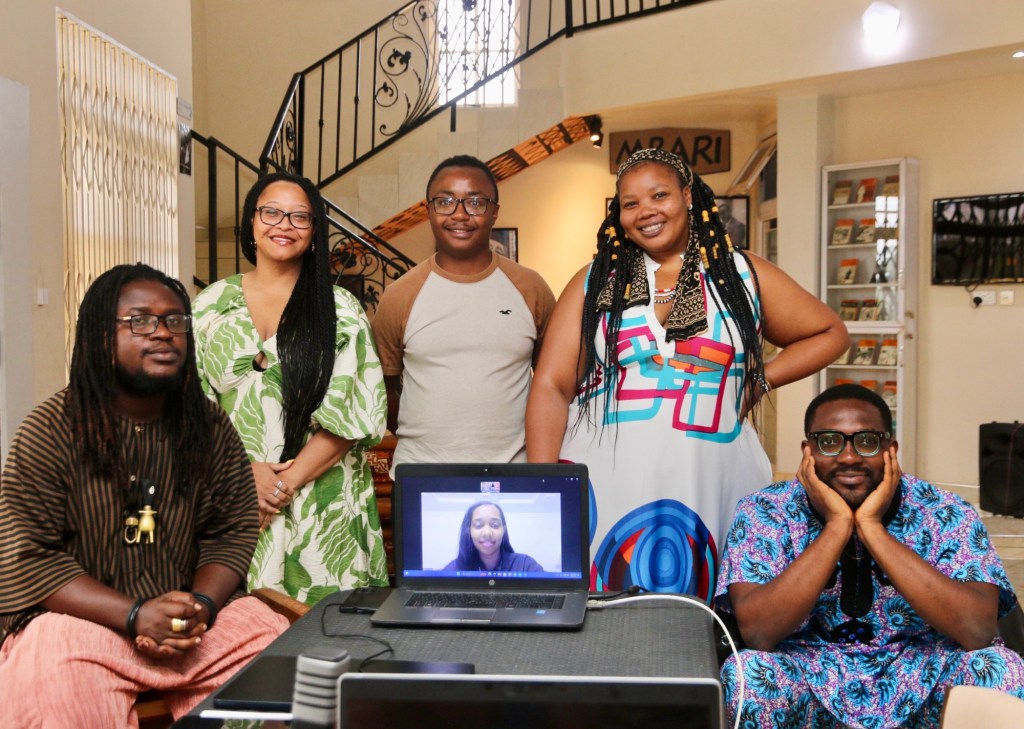
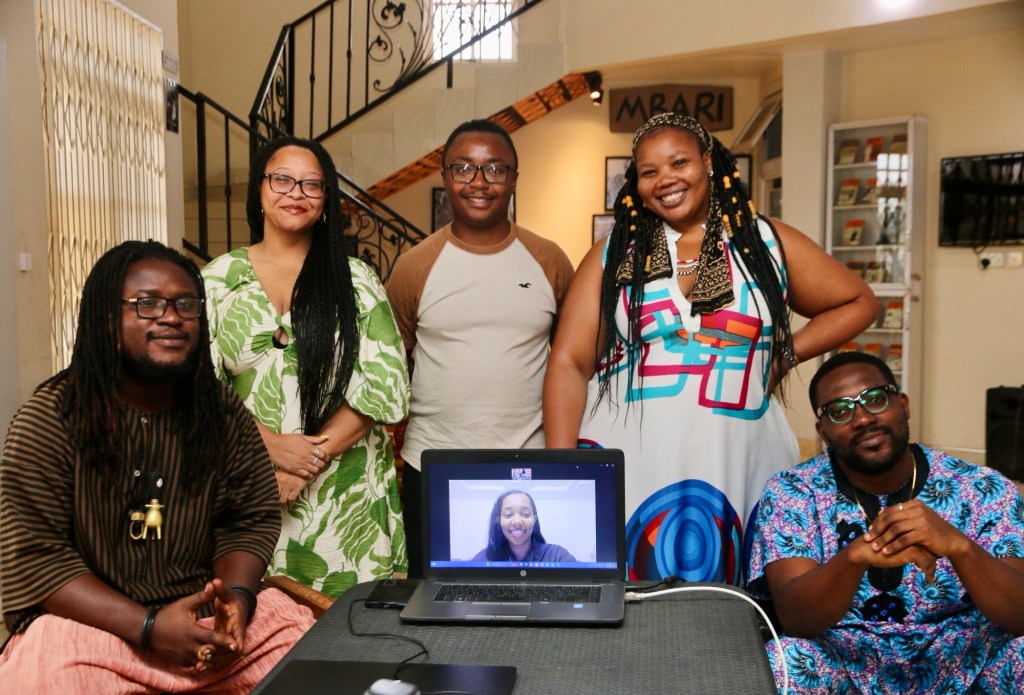
LOATAD Black Atlantic residents, Cohort 2 I can’t lie – this picture brings a tear to my eye. This is what Pan-African and Diaspora solidarity looks like. At the centre, on the laptop via Zoom, is Noor Salah H. Elfaki, a Sudanese writer and one of our 2025 LOATAD Black Atlantic residents. Standing behind her, and seated beside her, are members of her cohort, writers from Nigeria, South Africa, Zimbabwe, the USA, and Ghana, respectively.
Noor tried so hard to be with us in person. However, due to the ongoing situation in Sudan, she couldn’t make it to the residency physically. That didn’t stop her from showing up daily to participate with her cohort virtually.
When it became clear that she wouldn’t be able to join us in Accra, we suggested she attend online, but we weren’t sure the virtual experience would be as fulfilling. We were wrong. It was evident very early on that her presence was vital and necessary, and she was as much a part of the residency as her colleagues.
Please take a moment to read Noor’s powerful message. I hope it will a) inspire you to consider the myriad ways we can be more inclusive despite real and perceived barriers, both intended and unintended, and b) encourage you to support programmes and organisations that genuinely make a difference in the lives of people who are often overlooked or forgotten, often with very few resources.
This picture is poignant because it’s a visual representation of many dreams realised, yet it serves as a frustrating reminder of the cost of those dreams and the scale of the work that lies ahead
Thank you to all the 2025 LOATAD Black Atlantic residents. It was a pleasure to host you, and to the Hawthornden Foundation for supporting us in doing what is necessary in times like these.
Onwards…
-
The political and the personal

I recently spent time in Togo, in its coastal capital, Lomé, where I had the privilege of speaking with/listening to 23 everyday women over 60 whose lives have been irrevocably impacted by the vicissitudes of the country’s postcolonial politics.
Since Togo’s independence from France in 1960 (it was previously colonised by Germany and then partitioned between Britain and France after World War I. Coincidentally, today marks the 140th anniversary of the Berlin West Africa Conference at which major European powers negotiated and formalised claims to territory in Africa), it has had just four presidents, two of whom, father and son, have held power consecutively since 1967, 38 years and 19 years respectively.
Consequently, most of the women I spoke with have only ever known two leaders of their country in the 60-plus years they’ve been alive. Think how many presidents neighbouring Ghana has had in that time (11), or since it transitioned to democracy in 2000 (5) (I’m not holding Ghana up as an exemplar; I’m merely using it for comparison).
The pain of this political ossification, which has affected the lives of all citizens, is particularly felt by women of a certain age whose hopes for freedom in all its forms have been repeatedly dashed. Nostalgia for a more hopeful time, a hope that lies firmly in the past, characterises much of their lives. And when the memory of what could have been at the macro level collides with the present-day reality of what is on the micro level, the feeling of loss is palpable, and personal.
In this still from a short video my colleague, Seth Avusuglo captured last month, *Madame Adjovi, 80, recalls where she was and what she was doing during Togo’s struggle for independence 64 years ago, when she was just 16. Already radiant as she sat surrounded by her extended family in the compound of her home in a suburb of Lomé, she lit up as she remembered the anticipation of the time. In the video, she asks if she can sing a song the people sang in the years of struggle, “Ablodé,” which in Mina or Éwé means “independence” or “freedom.” “Ablodé Gbadja,” another variation of the song meaning “full independence,” is a state it can be argued is yet to be achieved.
I’ve now spoken in depth with over 75 women over 60 in three West African countries about the story of their lives. It’s been everything! I’m forever grateful to the National Geographic Society for believing in this project and their patience in nurturing it.
The archive of West African women’s stories is taking shape in powerful ways. I’m looking forward to finally getting it out into the world in various formats in 2025. If you’d like to get involved, do let me know.
Image: Charles Olince, translator, *Madame Adjovi, and me in the compound of Madame Adjovi’s home in Lomé, Togo. October, 2024.
📷 Seth Avusuglo -
Ford Global Fellowship!

I’m delighted to have been selected as a 2024 Ford Global Fellow!
Along with 25 other emerging leaders from Africa, the Americas, Asia, and the Middle East, we will be supported by the Ford Foundation to intensify our work in advancing social justice in our communities and in our countries to create a more equitable world.
From the Ford website: “The Ford Global Fellowship is a $50 million, 10-year investment that aims to connect and support the next generation of leaders from around the world who are advancing innovative solutions to end inequality. Our flagship international fellowship focuses on shared learning across issues, building and strengthening connections across borders, and developing a supportive, interconnected cohort across a wide variety of sectors. Our hope is that the fellowship will catalyze and amplify the impact of these fellows’ work, both individually and collectively.”
I’m looking forward to working in solidarity with, and learning from, my fellow Fellows and the amazing team at the Ford Foundation over the next 18 months!
Thank you to the 2021 Fellow who nominated me, and to the Ford Foundation for this wonderful opportunity to be part of a global community of practice!
Click here to read about the exceptional men and women who make up the 2024 cohort!
#FordGlobalFellows
-
Marielle Still Presente, 6 Years On…
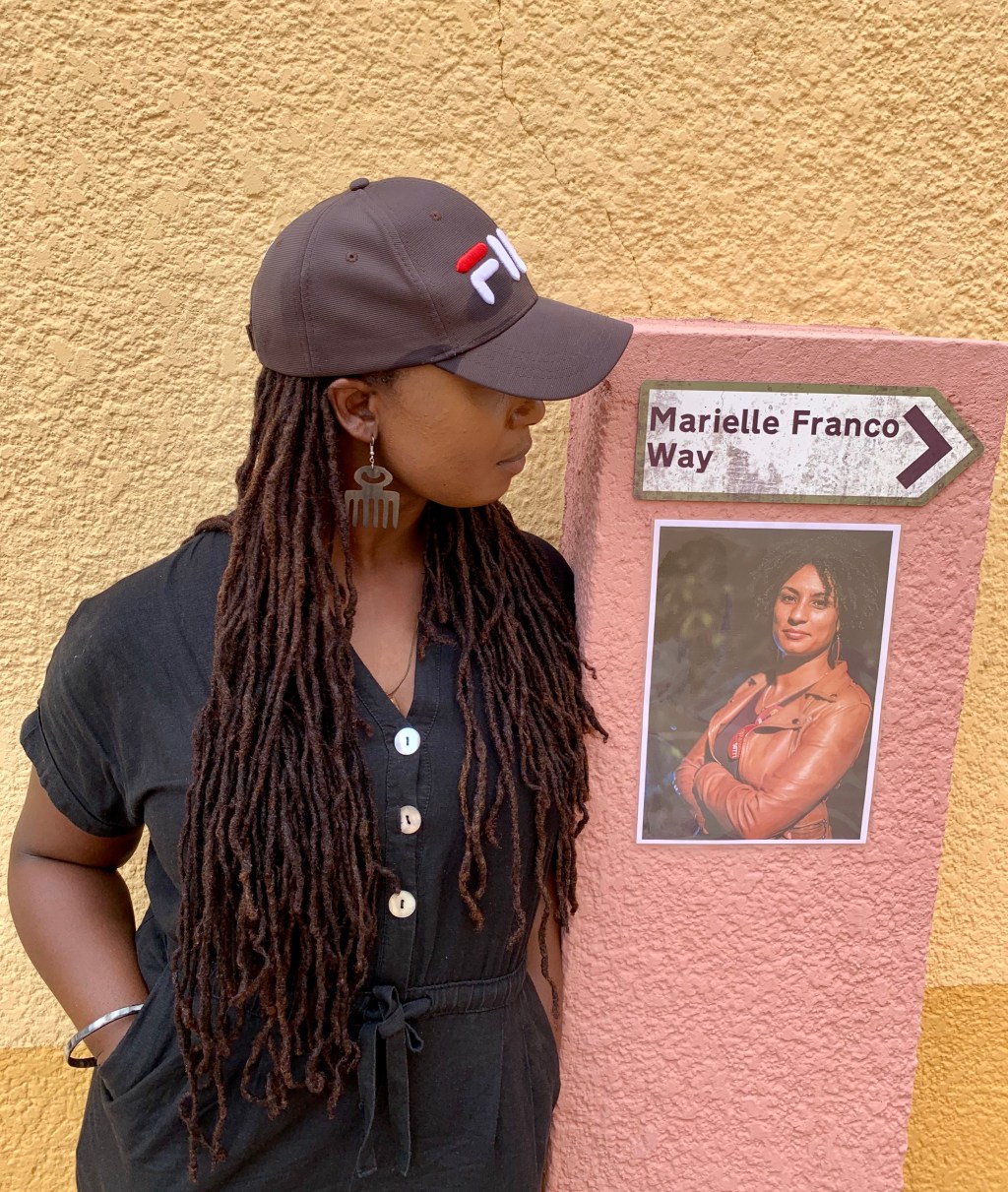
TW: Today marks the sixth anniversary of the assassination of Marielle Franco (1979-2018), the Afro-Brazilian politician who, along with her driver, Anderson Pedro Gomes, was killed in Rio de Janeiro while returning from a meeting titled, “Young Black Women Moving [Power] Structures.”
In 2016, Franco ran for a seat on the Rio de Janeiro city council. As a Black woman and single mother from the favelas, she positioned herself as a representative and defender of poor Black women and people from the favelas. She was one of the 51 representatives elected, receiving the fifth-highest vote total out of more than 1,500 candidates.
Marielle’s murder took place exactly nine months after I left the UK for Ghana, which was three days after the Grenfell Fire and just over a year after the Brexit referendum in which Britain decided to leave the EU, a place (and institution) I had been working in/with since 2010. As I sat in my new library in Accra, the confluence of all these events reminded me in a startling way that no matter how far you try to escape from “home,” whatever that constitutes, it is always calling you back in one way or another – physically, mentally, emotionally.
Events in the UK this week are yet another reminder that, for those of us whose identities straddle borders and can’t be constrained in tiny boxes, our position is always tenuous and, worse still, always under varying degrees of threat. The anniversary of the slaying of Marielle Franco is a grim and timely warning of what the thoughts and words of those with power can ultimately lead to if we don’t confront what we know to be true and call it out for what it is.
When we moved the Library Of Africa and The African Diaspora (LOATAD) to a new building at the end of 2019, there was no doubt that we would name one of our two walkways after Marielle Franco, a woman whose life was tragically cut short for seeking to represent the interests of society’s most vulnerable people – her people, my people, our people.
Rest in Power, Marielle Franco. A luta continua.
#MariellePresente
Image: Marielle Franco Way at the Library Of Africa and The African Diaspora (LOATAD), March 2020. By Seth Avusuglo.
-
Tracking down the last survivors of the Bengal famine (BBC News)
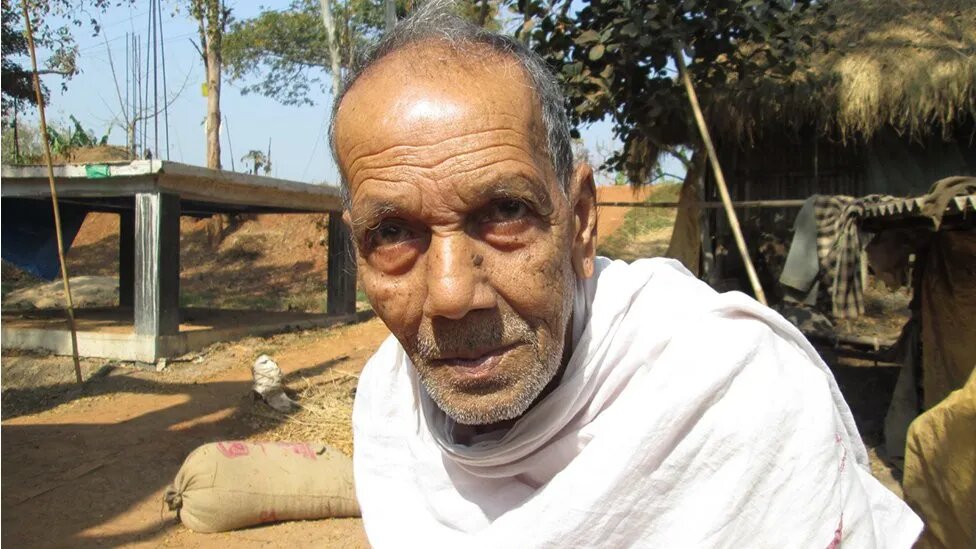
I’m deeply moved by this story about survivors of the Bengal famine and the profound work that Sailen Sarkar has been doing over the last few years travelling around the Bengali countryside gathering their first-hand accounts.
“Sailen has now gathered more than 60 eyewitness accounts. In most cases, the people he says he talked to were uneducated, and had rarely spoken about the famine or been asked, even by their own family. There is no archive dedicated to collecting survivor testimonies. Sailen believes their stories were overlooked because they were the poorest and most vulnerable in society.”
This quote, in particular, resonates with me: “It is as if they were all waiting. If only someone would listen to their words,” he says. I’ve found this to be so true on my own journey and in my own work. Silence does not always equate to complicity, particularly among those who have suffered oppression or have never had the chance to raise their voices to a whisper let alone a shout.
“We didn’t have to search for them – they weren’t hiding, they were all in plain sight, in villages all across West Bengal and Bangladesh, who were just sitting there as the largest archive in the world,” says Kushanava Choudhury, a Bengali-American writer, who accompanied Sailen on one of his visits to meet some of the survivors. “Nobody had bothered to talk to them. I felt tremendous shame about that.”
There are as many stories in the world as there are people. Every one of them deserves to be told and heard. Wishing Sailen Sarker more strength in his body and mind, and more power in his work.
Image: Sailen Sarkar/BBC | Caption: The famine forced Sripaticharan Samanta to leave his home village and take his chances in the city
-
Language and Memory in Gambia’s Ghana Town
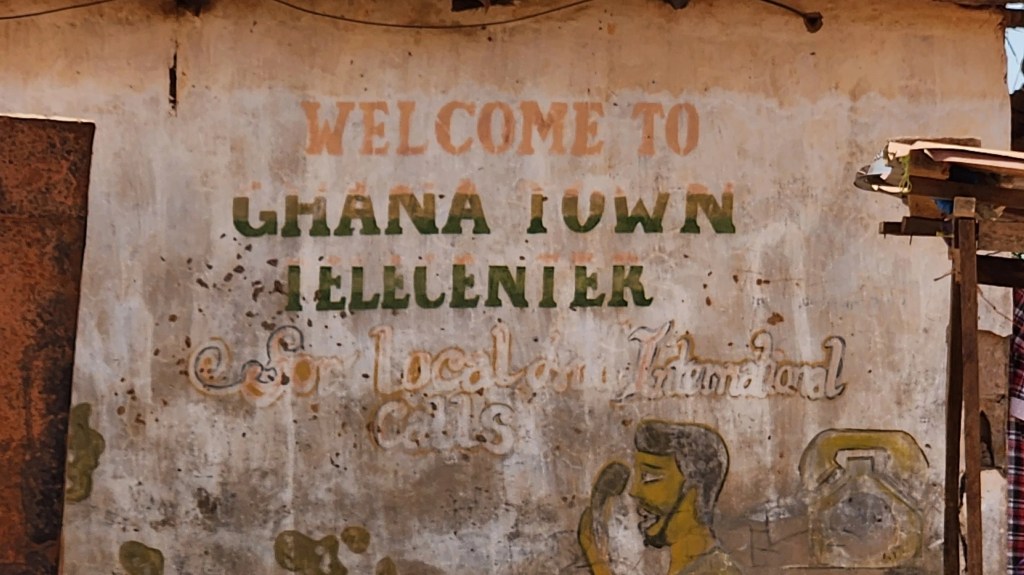
Wherever I’ve been on my journey along the coast of West Africa, I’ve encountered communities of Ghanaians who for generations have lived in the country they now call home. These are women whose parents came with them as children from immediate post-independence Ghana and who are now in their 60s and 70s with memories of their motherland still firmly in their minds even as their physical contact with the country has diminished.
Circumstances took their parents abroad. As families whose livelihoods are steeped in the ocean, they followed the current to where they were most likely to succeed. For Madame Pokuaa’s family, that was a thousand miles away in the tiny sliver of land that is The Gambia. She was a toddler when she moved from Ghana’s Central Region, which sits on the Gulf of Guinea, to the place that became known as Ghana Town along The Gambia’s Atlantic Coast, which is where I met her.
Madame Pokuaa and her contemporaries, Madame Adjoa and Madame Mensah, all first-generation Gambians, have known each other for most of their lives, bonded by sameness and difference, and by their relationship to a place that, for them, has receded from the material into the mist of memory. Though they had married Gambian men and given birth to Gambian children, and the parents who had brought them there were now buried in Gambian soil, their connection to Ghana remained unbroken, however tenuous it appeared on the surface.
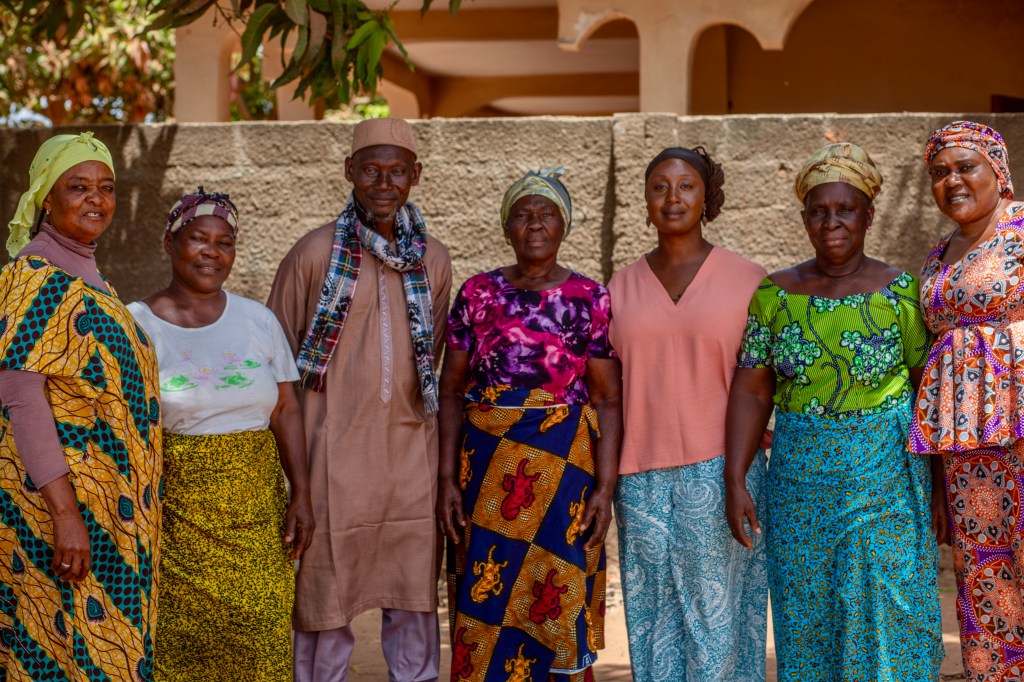
Madame Mensah (second left), Madame Adjoa (centre) and Madame Pokuaa (second right) in Ghana Town in The Gambia. Image: Sarjo Baldeh This manifested itself most tellingly through language. Multilingualism is common in West Africa, both within countries and within the wider region. It is not unusual for people to speak two or three local languages in addition to their own and the country’s official tongue, a colonial hangover which, in the case of West Africa, means English, French, Arabic and, exceptionally, Portuguese.
When I asked the women what language they would prefer to speak in, they initially chose Mandinka, the most widely spoken language in The Gambia. But as the conversation moved beyond the rudimentary and into the realm of remembrance, their chosen language proved elusive. When the women wanted to express themselves deeply, they instinctively switched to their Ghanaian mother tongue, Fante, which was, quite literally, their love language; it affirmed them. Before long, my translator, Mrs Senghore became redundant as Madame Pokuaa and I found common ground in my non-existent Fante made possible by my marginally functionable Twi. We spent hours going back and forth in a language we both had claim to but, for reasons of history, had never quite mastered.
According to the International Organisation for Migration, West Africa has the highest number of intraregional migrants in Africa. The region has “long been characterised by high levels of mobility that far predate the current configuration of borders established during the colonial era.” For diasporans of all backgrounds, the mother country is both memory and illusion while language, like borders, divides us, unites us and, ultimately, transcends us.
Header image by E. Konu
-
Erasure: Musings on American Fiction
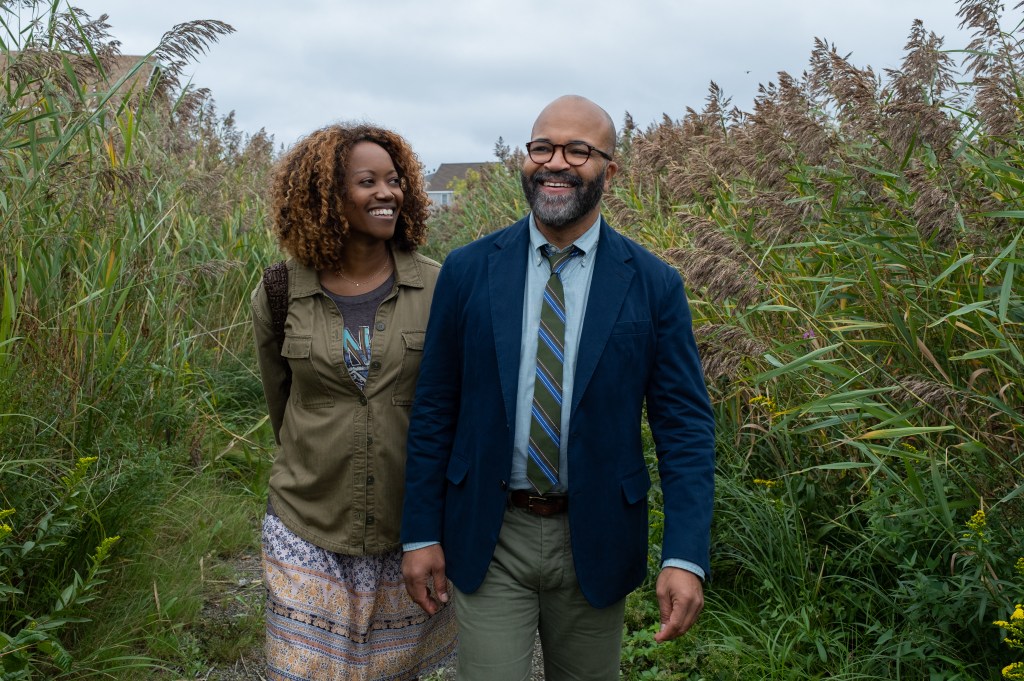
On its own, American Fiction is a great movie. But by making the stories of three Black women integral to the narrative, it elevates itself to a whole other level.
There’s a scene in the movie, American Fiction, in which Coraline, a lawyer who’s recently become involved with Thelonious “Monk” Ellison, a writer and the film’s main character, says to Monk, “You write women characters well.” The same can be said of Cord Jefferson, whose adaptation of Percival Everett’s 2001 novel, Erasure, is a nuanced homage to the generational struggles of Black women.
If the reviews are to be believed, American Fiction is about a struggling writer whose unwillingness to play into racial tropes in his work makes him a commercial failure. Exasperated by the limitations of what it means to be a “Black writer,” he bashes out a novel chock-full of stereotypes and bad language that publishers fall over themselves to acquire. Money and success follow for Stagg R. Leigh, the pseudonym Monk goes by, but they fail to placate Monk himself, who wrestles with the reality of selling out and its implications.
While it’s true that this is the film’s central plot, to leave it at that would be to do it a massive disservice. What makes American Fiction stand out is its masterful take on Black life, specifically Black middle-class family life, and the complexity of the relationships between Black peoples – yes, peoples – because, as Black people everywhere know, we are not a monolith.
To my mind, it is the stories of three Black women that anchor this film and make it exceptional: Agnes Ellison, Monk’s mother, played by Leslie Uggams, Lisa Ellison, Monk’s sister, played by Tracee Ellis Ross, and Lorraine, the longtime help to the Ellison family, played by Myra Lucretia Taylor.
Bound, as they are, in the great themes that overshadow every Black woman’s life – the pursuit of excellence, the weight of gender roles and expectations, colourism, and the age-old search for love when love doesn’t love you back, all set against the pervasive backdrop of class – these characters, brilliantly portrayed, elevate the movie to another level.
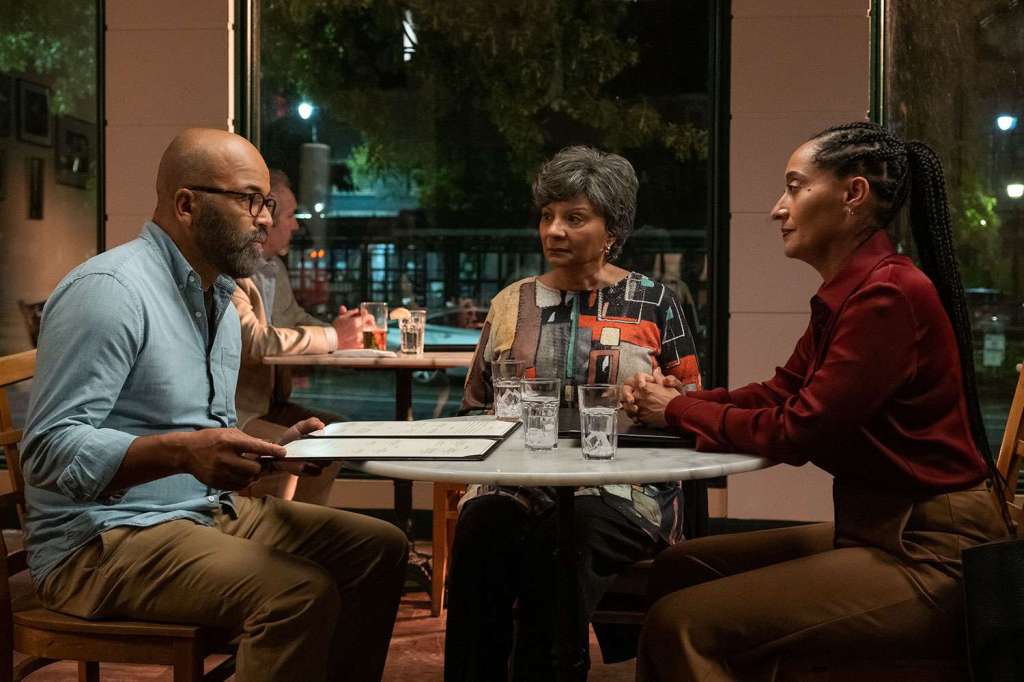
Thelonious “Monk” Ellison (Jeffrey Wright), Agnes Ellison (Leslie Uggams), and Lisa Ellison (Tracee Ellis Ross). COURTESY OF ORION PICTURES Agnes Ellison is a widowed matriarch in the process of succumbing to Alzheimer’s. We learn that she was cheated on multiple times by her late husband, who killed himself at their beach house. Her children are convinced that their mother didn’t know of her husband’s indiscretions, but every woman watching knows she was fully aware of what went on but chose to look the other way to keep up appearances. For women of a certain class and from a certain age, being married and staying married, whatever the circumstances, is a marker of resilience and loyalty to your family, and to your role as a woman. The fact that Ellison Senior was a doctor and, no doubt, sought-after by Agnes Ellison’s peers, was even more reason not to let such a catch go, the epitome of respectability politics.
With Agnes Ellison’s Alzheimer’s advancing, it falls to Lisa, the only daughter of three siblings, to look after her mother and be responsible for decisions around her care, financially and medically. It’s not the fact that Lisa is a doctor (all the Ellisons are doctors of one kind or another) or a recent divorcee that marks her out for the job of primary carer. No, as a daughter and a single woman without children, she obviously has little else to do and, regardless, it’s her unspoken duty as a woman to assume the labour of care.
It’s no wonder, then – though nonetheless shocking – that Lisa dies suddenly while on a lunch date with Monk, a heart attack doubtless caused by years of carrying the weight of expectations implicit in being a Black woman (#BlackExcellence #BlackGirlMagic) and the only girl child in a family of boys.
But it is in Lorraine, the Ellison’s housekeeper, that all these threads come together. After years of faithfully serving the family and putting everybody first, the quintessential Mammy albeit in a Black household, she finally, finally, gets a chance at love when she becomes engaged to local policeman, Maynard. Now in the twilight of her life and with her labour behind her as Agnes Ellison is placed in a care home, she is at long last free to pursue some kind of life, but not without first seeking the approval of ‘Mr Monk.’ This is the lot of women like her.
While the relationship between Lorraine and the Ellisons is genuine, it is by its nature unbalanced. There’s a touching moment in which Lorraine asks Monk to give her away at her wedding and he graciously accepts. We don’t know anything about Lorraine outside of her role as the help, not even her surname – Where does she come from? Does she have a family of her own? – and while we’re happy that she and Maynard are coming together, there’s a sinking feeling that she’s being handed over into another kind of servitude, even if it’s one of her own choosing.

Lorraine (Myra Lucretia Taylor) and Thelonious “Monk” Ellison (Jeffrey Wright) with Lisa Ellison (Tracee Ellis Ross). COURTESY OF ORION PICTURES Lorraine’s presence in the movie serves various functions. As a counterpoint to the relative wealth of the Ellisons, the deep and troubling issue of class within the Black community is glaring, if unexplored. Coupled with class is the issue of colourism, which is embedded throughout American Fiction but, again, never really explored.
When writing “My Pafology,” the satire that would become Stagg R. Leigh’s bestseller, Monk spends a significant amount of time grappling with a line of dialogue on how best to describe one of his no-good character’s skin tone – “Black as midnight,” “Black as coal” – playing up to the deeply held belief that dark-skinned Blacks are inherently deviant. That this is conventional thinking is evidenced by various studies that show, among other things, that dark-skinned Black people are more likely to be convicted of a crime than their lighter-skinned peers and that the darker you are, the less likely you are perceived to feel pain.
If there’s one flaw in the film, and perhaps it is not a fault with the film but with the character of Monk, it’s that it/he never considers how any of these issues directly relate to him. Monk never questions why he instinctively believes it’s his sister’s responsibility to care for their mother, or why their maid, who is often described, and self-described, as being “(like) family” is a dark-skinned, fat woman of late middle-age, the kind of woman who could be in service in any white home. He doesn’t even question why they have a maid at all and the meaning of his privilege. Perhaps the writers would have us believe that a man of Monk’s intellect would have wrestled with these issues long ago, but it’s evident throughout the movie that he lacks the self-awareness that would be a prerequisite for this. [As an aside, it’s worth noting that Monk’s younger gay brother, Clifford Ellison, dazzlingly played by Sterling K. Brown in an award-worthy performance, is also dark-skinned, which may go some way to explaining why, in addition to his sexuality, he is the black sheep of the family].
The fact that much of the analysis of American Fiction fails to mention, let alone reflect on, the integral nature of Black women’s stories to the success of the film, and the crucial themes their stories illuminate, goes to show how ‘Erasure’ is not only a fitting title for the book, but equally applies to how some have chosen to ‘see’ the movie devoid of the essential role women play. Whether this is wilful ignorance or this aspect of the film really did go over their heads is debatable.
American Fiction is a work of art. It challenges, provokes, and entertains, and does so beautifully. If there’s one thing it’s typical of, it’s that we’re living in culturally-rich times in which movies, music, literature, theatre, and art are once again serving a vital function in not just reflecting the times, but confronting them head-on, forcing us to imagine universal alternatives.
It reminds me of 2015 and being in New York City for the first time. That summer, I paid a visit to the Museum of Modern Art to see an exhibition of Jacob Lawrence’s Migration Series while listening to the recently released sophomore album, To Pimp A Butterfly, by the rising young rapper, Kendrick Lamar and reading the just published book, Between the World and Me by Ta-Nehisi Coates, a writer at the peak of his powers.
Perhaps I’m writing this review to remind myself that great art is not only possible, but necessary and imperative, that the onus is on us to write layered stories that are true to the life we know and not the one the world tells us is true.
Header Image: Coraline (Erika Alexander) and Thelonious “Monk” Ellison (Jeffrey Wright) in American Fiction.Claire Folger/Orion Releasing LLC
-
New interview on OkayAfrica

Growing up in the U.K., Sylvia Arthur did not read one African writer throughout her school years, even up to university. “That was a while ago. Things may have changed slightly, but not much,” she tells OkayAfrica in an interview.
“There are African writers who go way before Chinua Achebe. None of those people and our literature are generally acknowledged in the global literary canon,” she says, adding “When we celebrate our literature, we celebrate our writers, their work, and their stories.”
She decided to do something about that. In 2017, she founded the Accra-based Library of Africa and The African Diaspora [LOATAD]. The cultural institution is home to over four thousand books and is dedicated to collecting, preserving, and disseminating literature by writers of African descent from the late 19th century to the present day. It also has spaces for writing residencies, workshops, film screenings, and live music shows. Recently, Ghanaian artist Black Sherif shot a promo video at the library.
-
Subscribe
Subscribed
Already have a WordPress.com account? Log in now.
 Sylvia Arthur