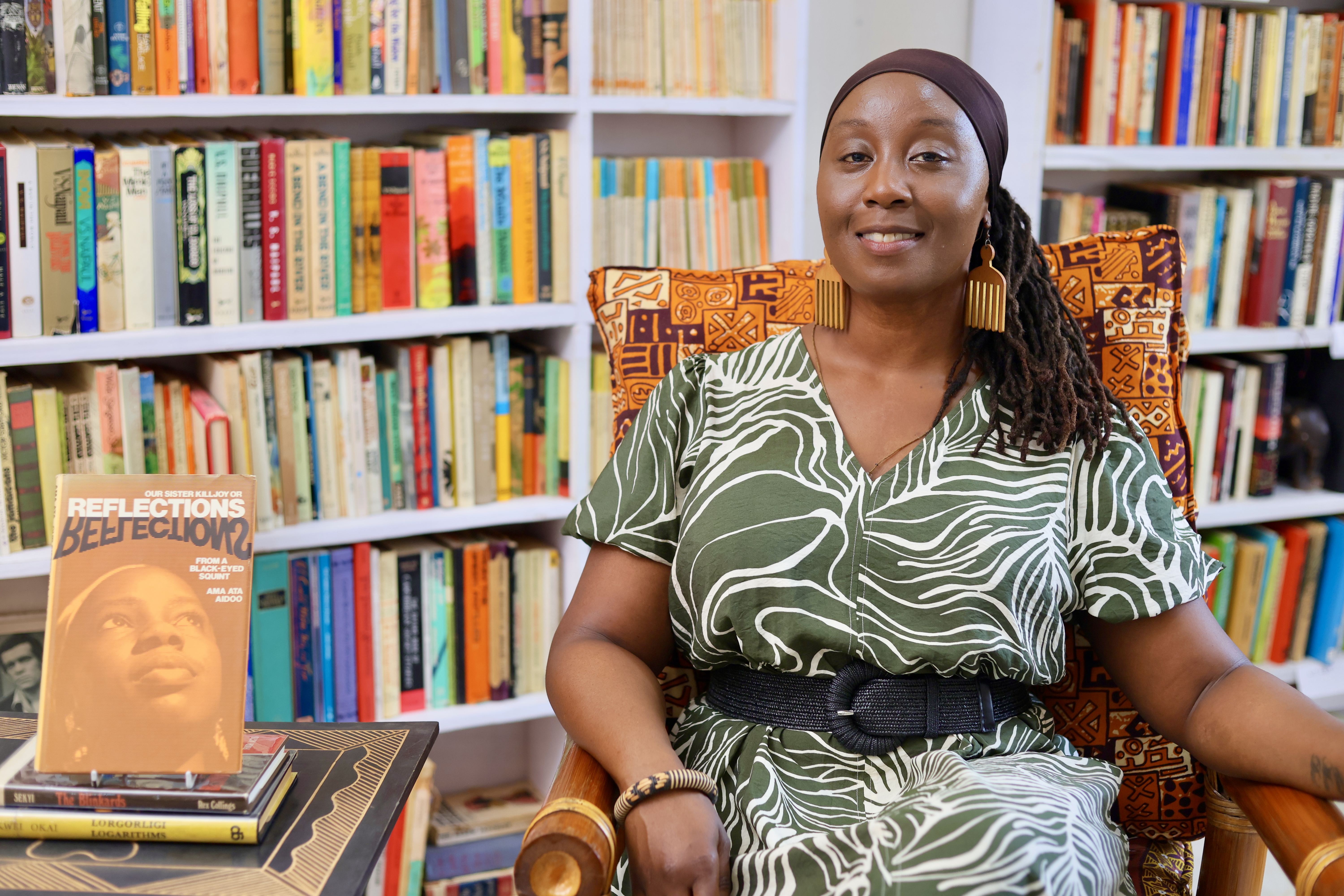
Sylvia Arthur is a cultural leader and institution builder, creating the archives, libraries, and knowledge infrastructures that preserve African memory and strengthen African cultural ecosystems.
She is the founder of the Library Of Africa and The African Diaspora (LOATAD), an internationally recognised library, archive, writing residency, and research institute based in Accra, Ghana. Founded in 2017 with 1,300 books from her personal collection, LOATAD has grown into a significant cultural institution dedicated to preserving African literary and cultural heritage while strengthening the ecosystems that support writers, researchers, artists, and knowledge producers across Africa and the Diaspora.
Sylvia is also the creator of A Women’s Oral History of West Africa (AWOHOWA), a National Geographic Society-supported archive documenting the lives of women aged 60 and above across the region. Through oral history, archival preservation, and public engagement, the project seeks to restore African women’s stories to the historical record and build an enduring archive of memory for future generations.
A Ford Global Fellow and National Geographic Explorer, Sylvia’s work focuses on expanding access to knowledge, preserving memory, and building the cultural infrastructure necessary for more inclusive and representative histories.
She is a two-time TEDx speaker, an Africa No Filter Narrative Champion, and a recipient of the Creative Activism Award. In 2023, she was named Literary Person of the Year by Brittle Paper in recognition of her contributions to African literature and culture.
Sylvia serves on the boards of CineFemFest, the African Feminist Film and Research Festival, and Instituto Sacatar, the longest continuously operating artist residency in Brazil. She is also a member of the Advisory Committee for the Schomburg Center for Research in Black Culture‘s centennial celebrations, a part of the New York Public Library.
Across all her work, Sylvia is committed to ensuring that all forms of African knowledge are preserved, accessible, and capable of shaping how future generations understand the past and imagine the future.